
Fueling Guide for Beginner Climbers
The article provides basic nutrition guidelines for beginner climbers, emphasizing that eating enough and maintaining a balanced diet is key to improving performance, recovering better, and preventing injuries. It explains the role of carbohydrates as an energy source, proteins in muscle repair, and micronutrients in physical function, along with the importance of hydration. The central idea is that eating well, with variety, and at the right times can significantly improve climbing performance.

Abril Guita
Nutritionist

Climbing is a demanding sport that combines strength, endurance, and focus. To progress, training isn't everything: nutrition plays a key role in performance, recovery, and injury prevention.
Sufficient Energy = Better Performance
Many people believe that eating less than necessary, especially when trying to maintain a low body weight, improves performance. However, this practice can lead to low energy availability, which ultimately harms both athletic performance and health.
Instead of eating less to weigh less, the goal should be to eat better to perform more. To achieve this, there are three simple guidelines that make a big difference:
1. Don't train fasted or hungry
Climbing requires available energy. Eating something before training helps maintain strength, focus, and endurance during the session.
2. Prioritize foods that provide real energy
Carbohydrates are the primary fuel for muscles. Including them in main meals and before climbing allows you to sustain effort and delay muscle fatigue.
3. Recover after climbing
After training, the body needs nutrients to repair muscles and adapt to the stimulus. A complete meal with protein, carbohydrates, and fluids promotes recovery and progress.
Carbohydrates are your fuel
Evidence shows that climbers often consume fewer carbohydrates than recommended, which limits their performance.
Carbohydrates are essential because:
- They are the main source of energy for the body
- They fuel the muscle after exercise
- They help with hormonal and cognitive balance
When to consume them?
Before climbing, including foods with carbohydrates helps start the session with available energy and delays the onset of fatigue. On the other hand, after training, consuming them allows you to replenish the reserves that were used (glycogen) and promotes muscle recovery, especially when combined with a protein source.
In simple terms, carbohydrates serve two key functions: before climbing they prepare the body to perform, and afterward they help it recover to progress
Protein for strength and recovery
Adequate protein intake is associated with better climbing level and upper body strength development. Proteins are not the main fuel during climbing (carbohydrates play that role), but they are essential for the body to adapt to training.
They also help to:
- repair muscle tissue
- reduce loss of mass
- promote adaptation to training
After climbing, muscles (especially forearms, shoulders, and back) experience normal micro-tears from exertion. Protein allows them to be repaired and strengthened, which translates into more strength, better endurance, and lower risk of injuries in the long term.
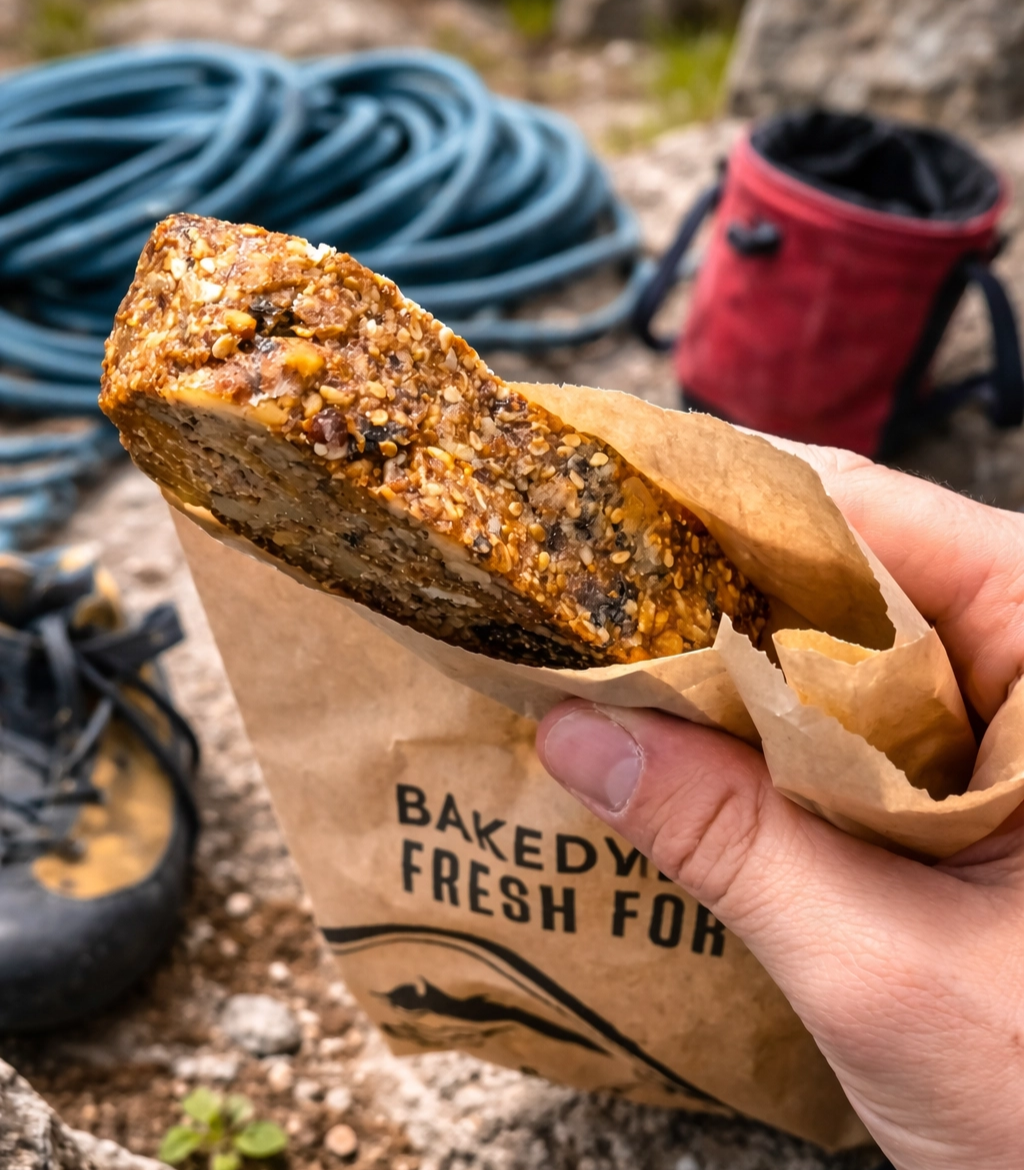
When is it best to consume protein to make the most of it?
The timing of protein consumption also influences how the body uses it. After training, muscles enter a recovery and adaptation phase in which they need nutrients to repair themselves. Consuming protein during that period helps stimulate muscle synthesis, that is, the process by which the body rebuilds and strengthens the muscle tissue that was worked during activity.
Therefore, including a protein source after climbing is a useful strategy to promote recovery and improve adaptation to training.
Consuming protein before training is not harmful, but its main function is not utilized at that time, since during climbing the body prioritizes using available energy (mainly from carbohydrates) and not proteins. Simply put: before climbing the body needs fuel; afterward, it needs repair materials.
Hydration
Even mild dehydration can affect strength and concentration. Maintaining adequate hydration with water before, during, and after climbing is essential to sustain performance and promote recovery.
Micronutrients: the invisible factor
Although they often go unnoticed, micronutrients (vitamins and minerals) are essential for performing well during training. They participate in key processes such as energy production, muscle contraction, concentration, and recovery. When they are lacking, the body can continue training… but with less strength, more fatigue, and greater risk of injuries.
In climbers, some micronutrients are especially important:
- Iron: helps transport oxygen to muscles and prevents early fatigue.
- Magnesium: promotes muscle function and coordination.
- Calcium and vitamin D: essential for strong bones and injury prevention.
- Zinc: contributes to muscle recovery and the immune system.
- B vitamins: allow food to be transformed into usable energy.
The problem is that many people eat less than necessary to lose weight, and by doing so they also reduce their intake of vitamins and minerals. This can slow down athletic progress even if they train well.
The simplest way to cover them is not to supplement, but to vary your diet. Including fruits, vegetables, legumes, nuts, and quality protein sources is usually enough to meet needs.
Practical rule: the more varied and colorful your plate, the more micronutrients you're giving your body. Practical rule for beginners
If you're just starting out:
- Eat enough (don't underestimate your needs)
- Include carbohydrates before climbing and afterward to recover
- Add protein afterward
- Vary foods to cover micronutrients
References:
- Thomas DT, Erdman KA, Burke LM; American College of Sports Medicine; Academy of Nutrition and Dietetics; Dietitians of Canada. Nutrition and athletic performance.
- Campbell BI, Kreider RB, Ziegenfuss T, La Bounty P, Roberts M, Burke D, et al. Position stand: diets and body composition. J Int Soc Sports Nutr. International Society of Sports Nutrition
Keywords

Abril Guita
Nutritionist
Functional and integrative nutritionist | Collaborator on the app’s nutrition area.
Follow on Instagram (@nutricion.ag_)