
Plant-based fueling for Climbers
A well-planned vegetarian or vegan diet can support climbers’ performance and recovery, as long as it is guided by a qualified professional and pays attention to key nutrients that help maintain energy and strength.

Abril Guita
Nutritionist
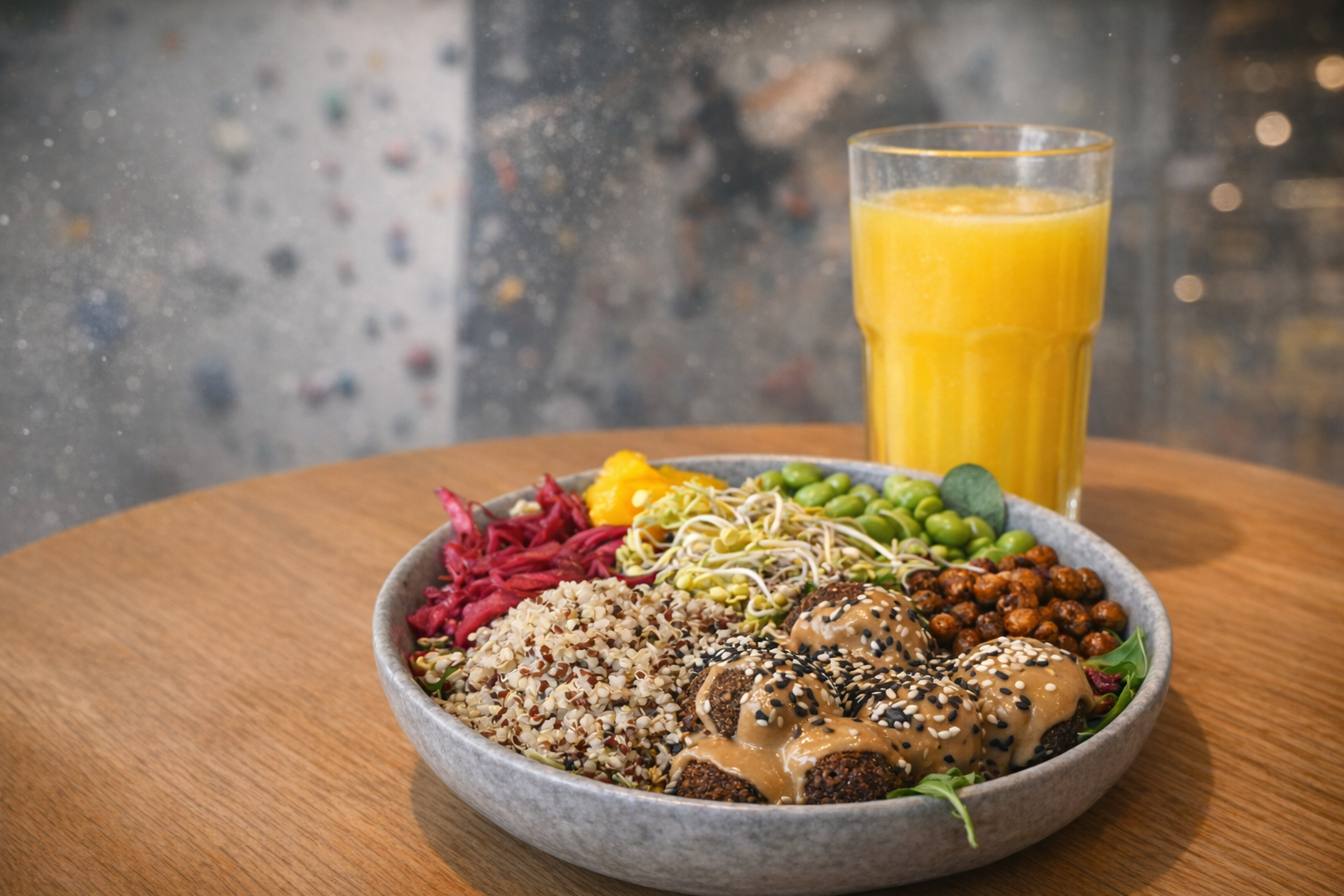
If you climb and eat vegetarian or vegan, you don’t need to relearn nutrition from scratch. The basics still apply. What matters is getting a few key details right, since they have an outsized impact on energy, recovery, and long-term progress.
Here are the key things you need to consider when fueling for climbing if you eat a plant-based diet.
Iron
One of the most relevant aspects is iron. In athletes, it's relatively common to find low levels, especially in those who don't consume animal-based foods. Iron is essential because it participates in oxygen transport to the muscles; when its levels decrease, early fatigue, reduced endurance, and a feeling of weakness during the session appear. In plant-based diets, it's not only about how much iron is consumed, but how it's combined: accompanying legumes with foods rich in vitamin C improves its absorption, while consuming coffee or tea with meals can reduce it.
Vitamin B12: the nutrient that cannot be overlooked
Within a vegetarian or vegan diet applied to climbing, vitamin B12 deserves special mention. This nutrient is fundamental for red blood cell formation, nervous system function, and energy production—three processes directly linked to athletic performance. When its levels are low, fatigue, muscle weakness, and reduced endurance can appear, symptoms that in climbers are often confused with lack of training or rest.
Unlike other nutrients, B12 is not reliably found in natural plant foods, so those who don't consume animal products need to obtain it through fortified foods or supplements. The main sports nutrition organizations agree that this is the safest strategy to maintain adequate levels and prevent deficiencies.
In practice, it's not something complicated or limiting: it simply needs to be PLANNED. When vitamin B12 is covered, a plant-based diet can perfectly support health, recovery, and climbing performance, just like any other well-designed dietary pattern.
Protein
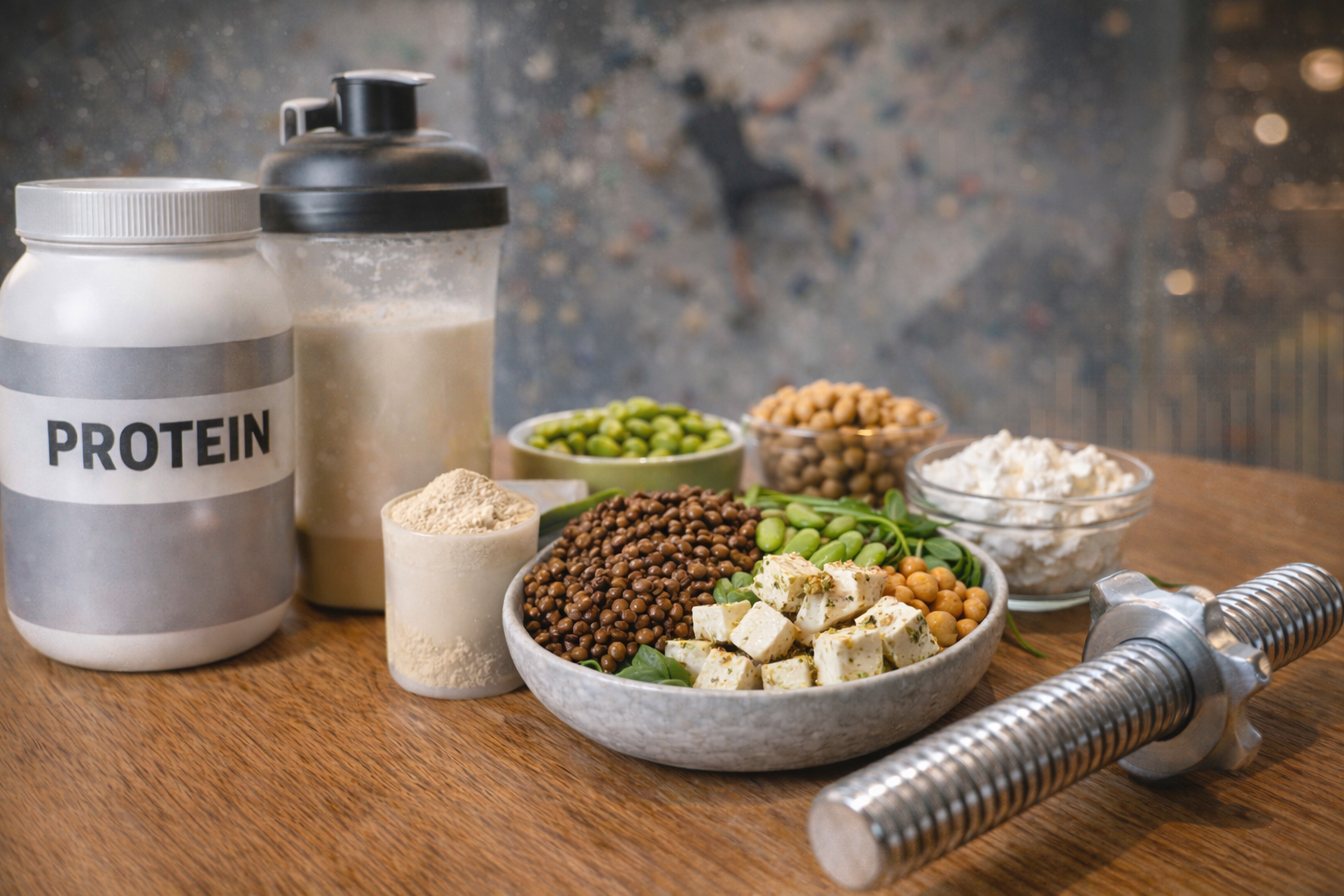
Another key point is protein. In climbing, it's not enough to consume sufficient total quantity; quality and distribution throughout the day also matter. The most effective plant sources to meet this requirement are soy and its derivatives, such as tofu or tempeh, as well as legumes combined with grains.
Distributing protein across several meals tends to be more favorable for muscle than ingesting it in a single meal, because it repeatedly stimulates muscle repair and adaptation processes.
Calories
A frequent but barely noticeable problem in climbers (regardless of whether they're vegan or not) is low energy availability. This concept describes a situation in which the body doesn't receive enough energy to cover both training and basic physiological functions. It can happen unintentionally, simply because the person trains a lot, has little time to eat, or tries to maintain a low body weight. In the long term, this situation can affect recovery, increase injury risk, and halt strength progress.
Fiber
It's also important to consider the timing of certain foods. Vegetarian diets tend to be rich in fiber, which is positive for digestive and metabolic health, but ingesting large amounts right before climbing can generate heaviness or abdominal discomfort. That's why many athletes perform better when they choose lighter meals before training and save more abundant, fiber-rich dishes for afterward.
Closing Thoughts
In conclusion, performance doesn't depend on whether the diet includes animal products or not, but on how well it's planned and followed with the help of a health professional. A plant-based diet can be perfectly compatible with climbing and high performance, as long as these strategic details are taken into account—which, although small, make a big difference on the wall.
References:
- Thomas DT, Erdman KA, Burke LM. Position of the Academy of Nutrition and Dietetics, Dietitians of Canada, and the American College of Sports Medicine: Nutrition and Athletic Performance.
- Jäger R, Kerksick CM, Campbell BI, Cribb PJ, Wells SD, Skwiat TM, et al. International Society of Sports Nutrition Position Stand: Protein and exercise.
Keywords

Abril Guita
Nutritionist
Functional and integrative nutritionist | Collaborator on the app’s nutrition area.
Follow on Instagram (@nutricion.ag_)